Cricket news · Reader intelligence
What Cricket News Signals Mean for Indian Fans
A squad can change in one official note; a rumour can change each time it is reposted. The useful skill is not reading faster. It is knowing which details make an India cricket update dependable, provisional or incomplete.
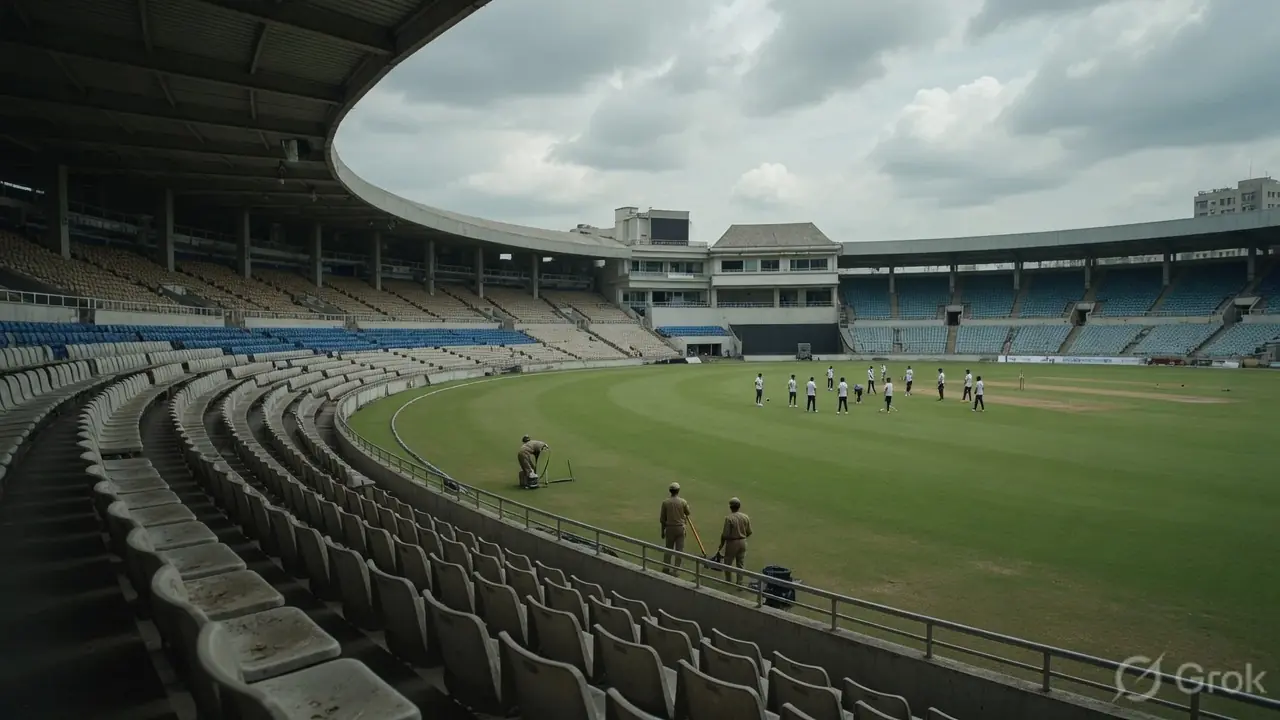
Evidence limit: Verified current-source discovery was exhausted for this commission. No present match, selection, injury, score or fixture change is claimed. The analysis is confined to durable ways of evaluating cricket updates from the BCCI, ICC, teams and event organisers.
The signal matters more than the speed
Breaking cricket news creates a striking contrast. One message may be an official squad release with a named team, competition and decision. The next may be a cropped screenshot carrying the same player’s name but no origin, no date and no accountable speaker. Both can reach a student’s phone within minutes. Only one tells the reader enough to make a sound judgment.
The central claim is simple: reliability comes from the structure of an update, not from the confidence of its headline. A responsible report makes clear who issued the information, what changed, which match or series it concerns, and whether the decision is final. When one of those elements is missing, certainty should fall. When several are missing, the item is a lead to check, not a fact to repeat.
That principle works across India international matches, domestic competitions and ICC events because the causal chain is stable. A governing body, team or event official makes a decision. A primary communication records it. Reporters add context. Aggregators compress the report. Social accounts compress it again. Each step can add clarity, but each can also remove a qualifier that mattered.
The common alternative view says that repetition creates confirmation: if many accounts carry the same claim, it must be true. Repetition can instead show that many accounts copied one unverified origin. A hundred reposts do not create a second source. They create a larger audience for the first claim.
Every update runs on three different clocks
Students often read cricket coverage as one continuous stream. A better model separates three clocks: the decision clock, the publication clock and the match clock. The decision clock starts when selectors, medical staff, administrators or match officials reach a conclusion. The publication clock starts when an authorised channel records that conclusion. The match clock determines when the information becomes relevant to the next fixture.
Those clocks rarely move together. A selection decision may exist before the squad is announced. A player may undergo assessment before a team is willing to state availability. A venue adjustment may require agreement among more than one organisation before a revised schedule is published. Silence during that interval is not proof of either outcome.
This explains why early reports sometimes contain a correct direction but an unreliable degree of certainty. A reporter may know that a player is being assessed and still be unable to say whether he is unavailable. A team may know that travel has been disrupted and still lack an approved start time. The mechanism linking evidence to conclusion is incomplete until the authority responsible for the final decision records it.
Concise takeaway: “Under assessment” describes a process. “Unavailable for the named match” describes a decision. Treating the first as the second is one of the fastest ways to turn a partial update into false breaking news.
BCCI, ICC and team updates answer different questions
Not every authoritative source has authority over every detail. The BCCI is the relevant origin for many decisions involving Indian national squads, domestic administration and competitions under its control. The ICC is the stronger origin for its global events, official tournament arrangements, playing conditions and matters within its remit. A home board is normally the clearest source for its own squad. A team communication may be the closest source for player availability, but its wording can remain deliberately limited.
That division of responsibility matters because readers sometimes ask the wrong source the right question. An ICC tournament communication may establish the event framework without confirming an Indian replacement player. A BCCI squad release may name the selected group without explaining every medical detail behind an omission. A team update may say a player will miss a match without providing a diagnosis. The lack of extra detail does not automatically weaken the decision that was actually stated.
Strong reporting therefore matches the claim to the institution capable of making it. The source of a revised international schedule should be able to authorise that schedule. The source of an India squad should be able to name that squad. The source of an injury diagnosis should be medical or clearly attributed to the team’s medical process. Authority is specific, not transferable.
| Update | Strong evidence | What may remain uncertain | Reader decision |
|---|---|---|---|
| India squad | Dated BCCI communication naming the side and assignment | Selection reasoning unless separately stated | Accept the named squad; avoid inventing motives |
| ICC event change | Dated ICC or event communication naming the affected arrangement | Knock-on effects not yet approved | Use the stated change only |
| Player availability | Team or governing-body statement tied to a named match or series | Diagnosis, rehabilitation detail or later matches | Apply the stated availability window |
| Schedule revision | Official schedule or release naming date, venue or time | Unpublished operational reasons | Replace the old detail and note the revision |
| Social-media claim | Traceable link to the original authorised communication | Anything added by the reposting account | Open the origin before sharing |
A squad announcement is a data object, not a debate prompt
A squad release should first be read literally. Which team was named? For which assignment? Who is included? Is leadership stated? Are reserves or replacements distinguished from the main group? Does the date belong to the original communication? These questions establish the record before analysis begins.
The temptation is to jump immediately from omission to explanation. A player absent from a list may be injured, rested, unavailable, outside the selection plan or covered by a separate communication. Unless the source explains the reason, choosing one interpretation and presenting it as fact breaks the evidential chain. The omission is verified; the motive is not.
Another mistake is combining lists that answer different questions. A preliminary group, a travelling party, a match squad and a playing XI are not interchangeable. The progression narrows from eligibility to selection to final participation. A name can be present at one stage and absent at another without contradiction.
For a hypothetical example, imagine that an official release names a fifteen-player squad for a three-match series and separately lists travelling reserves. A later graphic places all names in one design. The graphic may be convenient, yet it has erased a distinction in status. The correct response is to restore the categories from the original release, not to infer that every listed player has the same chance of appearing.
Injury language becomes less certain as it gets shorter
Medical reporting demands narrower wording than selection reporting. “Misses the next match,” “ruled out of the series,” “continues rehabilitation,” and “will undergo further assessment” describe different states. Compressing them into “injured” loses the timing and decision boundary that readers need.
A credible availability report should answer as many of these questions as the source permits: who is affected, which match or period is covered, what decision has been made, and when another assessment is expected. It should not fill a medical gap with an assumed body part, severity grade or recovery date. Those details sound precise precisely because they are easy to misuse.
Photographs and practice footage need similar restraint. A player batting in the nets can show participation in a training activity. It cannot alone establish match fitness, selection or medical clearance. Conversely, a player absent from a short public training clip is not necessarily absent from the session. Visual evidence is bounded by what the camera recorded.
The strongest competing interpretation is that reporters must translate guarded official wording into plain language. Translation is useful when it preserves the boundary. “Further assessment means no final availability decision has been announced” is clear. “The player will miss the match” is not a translation unless the source made that decision.

Schedules should be read as versioned records
A schedule is not merely a list of dates. It is a versioned record. When a time, venue or date changes, the reader must know which version is newer and exactly which field changed. Old cards, saved screenshots and cached search snippets can remain visible after the authoritative schedule has moved on.
The safest comparison starts with the complete event identity: teams, competition, match number or stage, venue, date and local start time. Compare the original and revised records field by field. If only the start time changed, do not describe the fixture as rescheduled in a way that suggests a different date. If the venue changed but the city did not, name the ground. Precision reduces the amount of false context that later reports inherit.
Time zones create a separate failure point for Indian audiences. An official source may publish local venue time, UTC or more than one zone. A report for Indian readers should label IST explicitly and retain the source zone when confusion is possible. Converting a time without stating the date can also create an error around midnight.
A hypothetical fixture illustrates the method. Suppose the original record lists a match at 19:00 local time and a revised record lists 18:30 at the same ground on the same date. The verified development is a start-time adjustment. Claims about broadcast demands, weather or security remain unsupported unless the notice supplies a reason.
The six-minute breaking-news check
A useful routine has to survive the moment when a headline is moving quickly. The following process is deliberately short. It does not promise perfect knowledge; it prevents weak evidence from acquiring stronger language as it travels.
- Freeze the claim. Write the claim in one sentence without adjectives. “Player X is unavailable for Match Y” is testable. “Major setback for India” is interpretation.
- Find the origin. Open the BCCI, ICC, relevant board, team or event communication. A screenshot of that communication is less useful than the public record because screenshots lose updates and context.
- Check identity and date. Confirm the team, competition, match or series, and publication date. Similar tournament names and recycled graphics cause avoidable errors.
- Mark the decision boundary. Identify what is final and what is pending. “Named,” “replaced” and “rescheduled” are decisions. “Monitored,” “considered” and “expected” are not.
- Compare one independent report. Use it to catch misreading, not to replace the origin. The independent report should point to the same underlying record.
- Publish only the supported sentence. Add context after the fact is secure. If the reason is absent, say it has not been stated.
The order is causal. Defining the claim prevents a vague search. Finding the origin establishes authority. Checking identity prevents a true statement from being attached to the wrong event. Marking the decision boundary controls certainty. Independent comparison tests interpretation. The final sentence then carries no more confidence than the evidence can support.
Five mistakes that turn updates into misinformation
Reading the headline without the governing verb
The verb determines status. “Could return,” “is expected to return,” “has been cleared to return” and “is named in the XI” are four different claims. Removing the verb’s uncertainty changes the story.
Treating a reporter’s inference as an official reason
Analysis may be reasonable without being confirmed. Good copy labels it: the omission may indicate workload management, but the stated reason is unavailable. The distinction lets readers understand both the evidence and the interpretation.
Using an undated graphic as the record
Graphics travel without captions. A squad card from an earlier series or a schedule card from a previous version can look current. The original date and assignment are essential identifiers.
Confusing correction with contradiction
A later official update can replace an earlier status because circumstances changed. That does not prove the first report was false. The record should show the sequence: pending assessment, then unavailable; original start time, then revised start time.
Ending with an invented next milestone
If no next medical review, squad announcement or schedule release has been stated, a report should not manufacture one. Stop at the confirmed boundary. A clean ending is more useful than a speculative promise.
A simple confidence scale for daily reading
Readers do not need a numerical score to judge every update, but a three-level scale helps maintain discipline. Label an item confirmed when an authorised source states the decision and identifies the affected event. Label it provisional when an authorised source states an ongoing process or when a credible report has evidence but no final decision. Label it unverified when the claim cannot be traced to an accountable origin.
The scale should follow the claim, not the account. An official account can post a provisional medical update. A respected reporter can publish a confirmed schedule after linking the authorised revision. A large aggregator can circulate an unverified claim. Reputation affects how quickly a lead deserves attention; it does not replace the evidence needed for the final label.
For broader reporting and durable explainers, the latest cricket news from Cricket Pandit can be read with the same test: locate the recorded fact, separate the interpretation and preserve whatever remains unknown. That habit is especially valuable when India squads, international schedules and ICC event notices arrive close together.
Indian cricket news becomes easier to use once speed and certainty are separated. Watch the next official communication, not the loudest prediction: a dated squad list, a clearly bounded availability decision or a revised schedule with the affected fixture identified. If that record does not yet exist, the practical choice is to keep the claim provisional. The strongest reader is not the first to repeat an update, but the one who can state exactly what has been decided, who decided it and what remains unresolved.