What does 10.3 overs mean on a cricket scorecard?
It means 10 completed overs and three legal balls, or 63 legal deliveries in total. It does not mean 10.3 decimal overs.

A live score is useful only when you can read the match behind the numbers. This Cricket Pandit guide explains overs, run rates, partnerships, ball-by-ball notes, interruptions and fantasy-point context without pretending to provide an official real-time feed.
· Cricket Pandit News Desk
A live cricket page can look busy: runs, wickets, overs, partnerships, required rate, projected score and several short notes may change after every ball. The first skill is to separate the scorecard's stable structure from the stream of updates. Read the batting team's runs and wickets, then the completed overs, and only then judge the pace of the innings. A display of 86/2 after 10.3 overs means 86 runs for two wickets after 10 overs and three legal balls; the decimal is not three-tenths of an over.
Next check who is batting, who is bowling, and the last dismissal. These three lines explain why the current run rate may be rising or falling. A new batter can spend several balls settling in, while a set batter may be targeting a weaker bowler. The partnership line tells you whether the pair has rebuilt after a wicket or is already accelerating.
For the official schedule and match centre, use the ICC fixtures and results page or the relevant competition's official website. Cricket Pandit does not claim to replace an official score feed; this guide explains how to interpret one.

Ball-by-ball commentary is most useful when it describes the delivery: line, length, movement, contact, fielding and result. A dot ball can be a false shot, a deliberate leave, a defensive block or a clean strike straight to a fielder. Those outcomes have different implications even though each adds zero runs.
Read sequences rather than isolated phrases. Three dots followed by a boundary may show pressure released by a calculated risk; three edges may show that the batter is surviving rather than controlling the bowler. Commentary can reveal a change of plan, such as short bowling, wide yorkers, spin into the pitch or a packed off-side field.
Do not treat a commentator's projected score or momentum label as a guarantee. It is a snapshot based on the present rate. Wickets, batting resources, pitch behaviour and matchups can change the next phase quickly. Use commentary to understand what happened, then wait for evidence before inferring what will happen.
The current run rate is runs scored divided by overs expressed as legal balls. The safest mental method is to convert the innings into balls first. At 10.3 overs, 63 legal balls have been bowled, not 10.3 decimal overs. A score of 86 after 63 balls corresponds to 86 divided by 10.5 conventional overs, or about 8.19 runs per six-ball over.
In a chase, required run rate uses runs still needed and legal balls remaining. Suppose a team needs 72 from 48 balls. That is nine runs per over. If a wicket falls without a run, the arithmetic rate remains nine, but the difficulty has increased because one batting resource has been lost. This is why the same required rate can feel different at 140/2 and 140/7.
| Live metric | What it measures | Common mistake |
|---|---|---|
| Current run rate | Scoring speed so far | Treating 10.3 overs as 10.3 decimal overs |
| Required run rate | Runs needed per six legal balls | Ignoring wickets and remaining batters |
| Projected score | Simple extension of the present rate | Reading it as a forecast |
| Partnership rate | How the current pair is scoring | Ignoring who faced most balls |
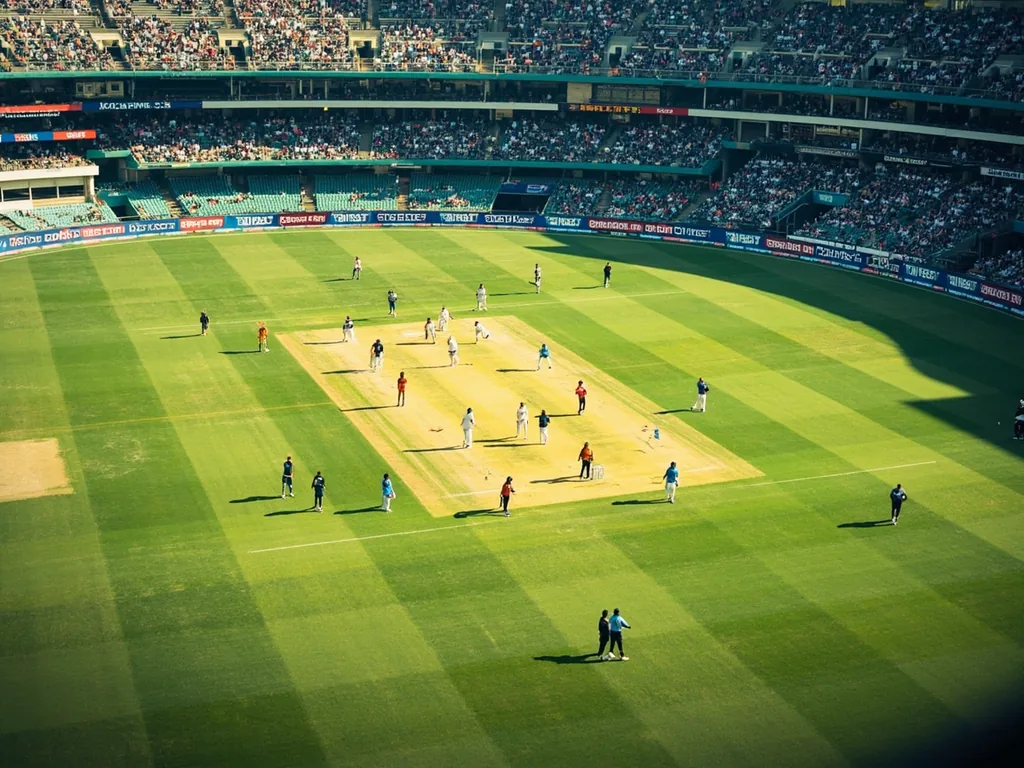
Short-form cricket is easier to understand when divided into phases. During the powerplay, fielding restrictions generally create boundary opportunities but the new ball can also move. The middle overs often bring spin, matchup changes and efforts to protect wickets. The final overs increase boundary intent and dismissal risk.
Formats and competitions apply their own playing conditions, so consult the relevant official document. The ICC playing conditions page publishes current documents for Tests, ODIs, T20Is and major ICC events. The MCC Laws of Cricket remain the foundation, while competition playing conditions add format-specific details.
Resource context matters as much as the phase. A team with eight wickets in hand can attack differently from a team with three. The remaining batting order also matters: wickets in hand are more valuable when established batters and capable finishers remain than when the tail is exposed.
A live score can pause for weather, an injury, a review, sightscreen movement or another operational reason. Do not assume a paused feed is broken. Look for an official status line and note whether overs or targets have changed. In limited-overs matches, a revised target may be calculated under the competition's interruption method; the live scorecard should identify the new target and overs available.
Reviews can temporarily leave the score in an uncertain state. Wait for the official decision before changing your interpretation. A boundary may also be corrected to fewer runs after replay, a no-ball can add a run and an extra delivery, and byes or leg-byes may alter the bowler's figures differently from the team total.
If two score services disagree, prefer the official competition match centre. Third-party apps may update at different speeds or correct an event after the next ball. Refreshing multiple unofficial feeds every few seconds creates more confusion than clarity.

Live match events and fantasy points are related but not identical. Runs, wickets, catches, stumpings and run-outs are visible on the scorecard, while bonuses, economy bands, strike-rate adjustments and captain multipliers depend on the platform's published rules. Never copy a points total from one app into another without checking the scoring system.
Separate confirmed points from provisional ones. A catch can be reassigned, a run-out contribution may be credited differently, and rate-based bonuses often cannot be final until a player completes the required minimum balls or overs. The safest live note has three columns: confirmed event, possible platform bonus, and condition still to be met.
For pre-match decisions, confirm the playing XI and substitute rules before the first ball. After lock, use the live page to understand performance rather than chase unsupported rumours. Responsible fantasy analysis explains variance; it does not promise a win or encourage impulsive entries.
When an event matters, use a simple hierarchy. First, check the official match centre for score, wickets, overs and result. Second, read the ball-by-ball entry for the event description. Third, consult the official team's or competition's verified channel for squad changes, delays or medical updates that may not fit neatly in the scorecard.
Record the update time and the match state. A screenshot saying a team needs 40 runs is useless without overs, wickets and timestamp. For a correction, preserve both the original claim and the authoritative update rather than silently mixing them. This discipline is especially important for rain revisions and disputed dismissals.
Avoid screenshots from anonymous social accounts, reposted graphics without a source link and messages that say “confirmed” without naming the competition. Speed is less valuable than accuracy. A one-minute wait for an official update is usually better than circulating the wrong score.

This routine works for a bilateral international, an ICC event or a domestic league without pretending that every match follows the same tactical script. It also keeps the Cricket Pandit live matches hub useful between fixtures: the method remains valid even as teams and tournaments change.
Quick answers for common scorecard and live-update questions.